

Media oligarchs are nothing new

Blog categories
Related article



For platforms
License original, human-reviewed content at scale.
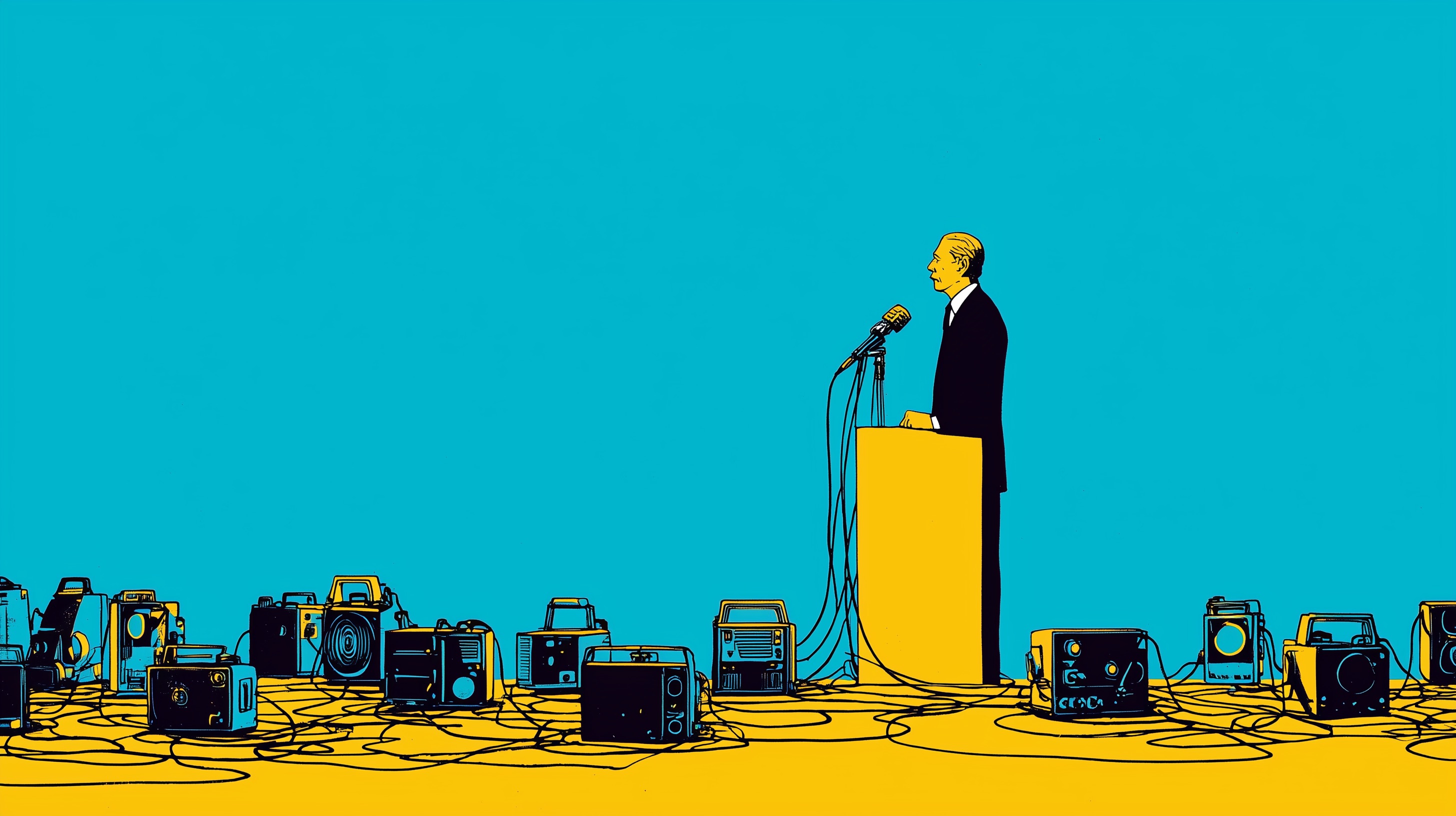
In October 2024, The Washington Post announced that it wouldn’t endorse a presidential candidate for the first time in 36 years. It’s been reported that the paper’s editorial board was planning to endorse Kamala Harris, but management had second thoughts. The Post’s publisher and CEO, William Lewis, formally took responsibility for the decision, but there’s been widespread speculation that it may have ultimately been made by the paper’s billionaire owner, Amazon’s Jeff Bezos. Meanwhile, on the other side of the US, biotech billionaire Patrick Soon-Shiong, owner of the Los Angeles Times, apparently intervened to stop the paper from endorsing Harris.
Of course, newspapers aren’t the only media that has attracted the attention of the oligarchy. In 2022, Elon Musk, currently the world’s richest person, procured Twitter for $44 billion, gaining control over a platform that is arguably more powerful than the Washington Post and the Los Angeles Times combined.
Elite domination of the media isn’t a new phenomenon. It's often said that, while history doesn’t usually repeat, it often rhymes. Before Bezos or Musk, there was William Randolph Hearst. Here’s his story, and why it matters.
Enter Hearst
Hearst’s career as a media baron began in 1887 when his wealthy father, Senator George Hearst, gifted him with The San Francisco Examiner. A few years later, he turned his attention to New York City, buying up the New York Morning Journal.
If it bleeds, it leads
Taking a cue from his rival Joseph Pulitzer, Hearst’s papers became exemplars of “yellow journalism,” focusing on eye-catching headlines about lurid topics such as crime and sex as well as lavish illustrations and dubious (or even outright fake) sources.
But this wasn’t just the 19th-century equivalent of clickbait. Alongside vulgar hucksterism, there were legitimate exposes of corruption and malfeasance. For example, San Francisco Examiner reporter Winifred Black investigated the city’s public hospitals and highlighted their abuse of poor women patients.
Building an empire
By the 1920s, Hearst owned 28 newspapers spread across the US. He also published books and magazines (many of the periodicals he acquired, such as Cosmopolitan and Town and Country are still around today). He also owned two news services, film production operations (including Cosmopolitan Productions), and an animation studio (International Film Service). He also sponsored major events like the Graf Zeppelin’s circumnavigation of the globe in 1927 (the first by an airship). In another parallel with today’s media moguls, Hearst also relied on revenues from more profitable aspects of his empire (in his case mining, ranching, and forestry) to subsidize his passion projects.
Pushing politics
Hearst wasn’t afraid to use his media properties in support of his politics. Although he was elected to the House of Representatives twice, most of his influence came from the sidelines. While Hearst was initially aligned with the left wing of the Democratic Party, he drifted rightward from the 1920s onward. He was appalled by Franklin Roosevelt’s New Deal, denouncing it as an exercise in communism. He also used his papers to inveigh against the World Court, which he saw as an attack on American sovereignty.
By the 30s, Hearst was a fervent isolationist, and this made him something of a useful idiot for the Nazis. He published a number of columns by Hitler and other dictators. In the words of historian David Nasaw, while Hearst appreciated the fact that Hitler “produced headlines and delivered sharp, incisive copy, [Hitler] fell out of favor because he was terrible at meeting deadlines.”
(Hearst did at least have the sense to condemn the Nazis after the atrocities of Kristallnacht, though as late as 1941 he still spoke positively of Hitler when Germany invaded the Soviet Union.)
With modern-day Hearsts following the same playbook, questions of platform power and editorial independence are as pressing as ever in the 21st century. Luckily, Newstex can provide publishers with a crucial advantage. We help original voices be heard over the din of the plutocracy, and we help creators receive proper compensation when their work is used by AI.
Why the modern mogul is inescapable
For all his power, Hearst was arguably far more constrained than his present-day counterparts. People had to consciously choose to read his publications, and if you wanted to avoid them, you had plenty of alternatives. But modern media tycoons such as Bezos and Musk have far more reach. Amazon has become an omnimart that will sell you almost anything you could possibly want, whether you’re looking for a book for your kid, an appetizer for your guests, or a medicine for your high blood pressure. While Musk has not achieved the same degree of ubiquity for Twitter (now X), he nevertheless possesses outsized influence over public discourse by deciding what content is promoted and what is ignored. Even if you don’t use X, it’s still influencing the world around you. Moreover, by tweaking the systems that decide what you see first and what you never see at all, Amazon and X can nudge or dissuade without ever issuing an editorial.
Hearst could only shape what readers read. Today’s media moguls increasingly decide what users find, what spreads, and what becomes common knowledge. But it’s not all doom and gloom. The Internet has made it easier than ever for independent voices to share their insights with the world, and a single person with a Wordpress blog can compete with the most storied media outlets. Preserving genuine plurality in such an environment depends less on confronting individual moguls than on strengthening the systems that allow independent publishers to reach audiences on their own terms.
About the author,
Jason Loch
Jason Loch is a historian of the British constitution whose work focuses on the Crown, the House of Lords, and the Church of England.

