

Content licensing in the age of trusted media: Newstex at FIPP World Media Congress 2026

Blog categories
Related article




For platforms
License original, human-reviewed content at scale.
Something has shifted in how the media industry talks about content. Its value is an increasingly prominent part of the conversation. This in turn leads to questions about who holds the rights, who needs access, and what it means to provide platforms with the kind of journalism, niche blogging, and commentary that they need to improve their products at scale.
The media industry has faced disruptions like this before. When Craigslist arrived, it took apart the classified advertising that funded most newspapers, and the industry was slow to react. AI feels comparable in scale, but this time I sense many publishers want to move more nimbly. The difference is that disruption, handled well, can also be an opening.
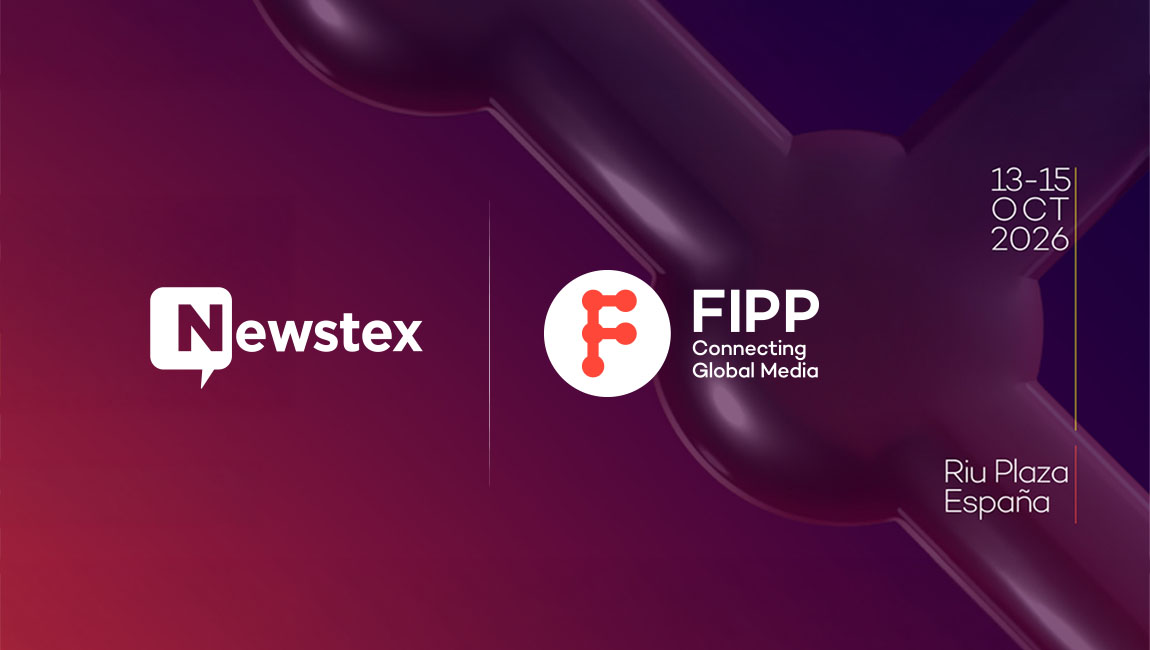
That shift is exactly why Newstex will be at the FIPP World Media Congress in Madrid this October. Not as bystanders to the conversation but as active participants in it.
Disruption, handled well, can also be an opening.
What the FIPP agenda reveals about content licensing
FIPP has been gathering the global media industry for 101 years. What makes this year's congress feel particularly relevant to us is what the agenda reveals about where value is concentrating right now. The sessions that stand out are not about survival.
They are about positioning. "The Trust Economy," "Trusted Brands in Contested Markets," and "The Rise of AI Licensing Marketplaces" are not peripheral topics at this congress. They are central to it. And they point to the same underlying reality: In a media environment crowded with undifferentiated content, the publications that have built authority, consistency, and a clear editorial identity are becoming more valuable, not less.
What I keep returning to is disintermediation. As audiences increasingly meet content through AI interfaces rather than going to the source, publishers risk losing their direct connection to readers. That is the undercurrent of concern beneath many of these sessions, but this disintermediation also presents an opportunity for trusted sources of original content.
If audiences increasingly arrive through platforms rather than a publisher's own front door, then the content feeding those platforms becomes something worth paying for. The platforms I speak with are no longer asking simply for more content. They are asking for content they can stand behind.
That is the conversation Newstex has been part of for years. Seeing it take center stage at FIPP this October feels like a natural moment to be in the room.
The platforms I speak with are no longer asking simply for more content. They are asking for content they can stand behind.
Bringing smaller publishers into the licensing conversation
Newstex works with more than 1,600 active publications, connecting journalism, niche blogging, and commentary to the platforms, data providers, and information services that need rights-cleared content at scale. Many of them are smaller and independent publishers, the kind of distinct editorial voices that rarely have a seat when the terms of content licensing are being set. Advocating for them at conferences like the FIPP World Media Congress is a large part of what we do.
Licensing is part of the answer to disintermediation because it allows publishers to capture value wherever their content appears. Content licensing allows publishers’ work to be used and monetized in contexts they were never positioned to pursue on their own. It is genuinely a win-win: The platform that licenses the content provides something its users value, and the publisher is compensated in a way that lets them keep producing the work everyone relies on.
What I care about most is that the smaller and newer publishers have a place in these conversations. They are often sources of extremely original work, and too often the ones left out when the rules get written. I've written before about what it takes to make AI licensing work for publishers of all sizes, and that same principle is what draws us to conversations like this one.
That is what we are bringing to Madrid, and it is what we look forward to discussing with the platforms and publishers asking the same questions the FIPP agenda is asking this year.
For years these conversations happened in fairly separate worlds, publishers in one room, platforms and technologists in another. I see that changing.
Connect with us in Madrid
If you are attending FIPP this October, we would love to connect. Our team will be there across all three days, genuinely interested in the conversations happening on both sides of the content licensing equation: platforms looking for rights-cleared sources that hold up under scrutiny, and publishers thinking about where their content goes next.
What I am most looking forward to is the cross-pollination. For years these conversations happened in fairly separate worlds, publishers in one room, platforms and technologists in another. I see that changing, and FIPP is one of the places where those perspectives genuinely mingle. That is usually where the useful ideas come from.
I'll be in Madrid with my colleagues Laura, Maria, and José Mauricio. Find us there, book a meeting with us.
About the author,
Michael Ellis
Michael Ellis is Newstex’s content syndication expert. He helps authoritative publishers to develop their brand within digital libraries that serve professional researchers around the world.


