

Content syndication platforms in 2026


Blog categories
Related article





For platforms
License original, human-reviewed content at scale.
Discover the leading content syndication platforms of 2026: your guide to expanding reach and boosting SEO with the right tools.
In the digital marketing sphere, content is not just king; it's the entire kingdom. Its role in driving communication, engagement, and brand building is unparalleled. Yet, the true challenge lies in transcending the boundaries of your immediate audience. Enter the realm of content syndication, a strategic maneuver designed to catapult your content across the digital ecosystem and magnify its impact and SEO value.
What are content syndication platforms?
Content syndication platforms are services that enable the republishing of content such as articles, blogs, infographics, and videos on third-party websites. The objective is to broaden the audience for your content, increase brand exposure, and, ideally, drive more traffic back to the original source. For SEO, the careful selection of these platforms is pivotal to ensure that syndication enhances rather than detracts from your site's search engine rankings.
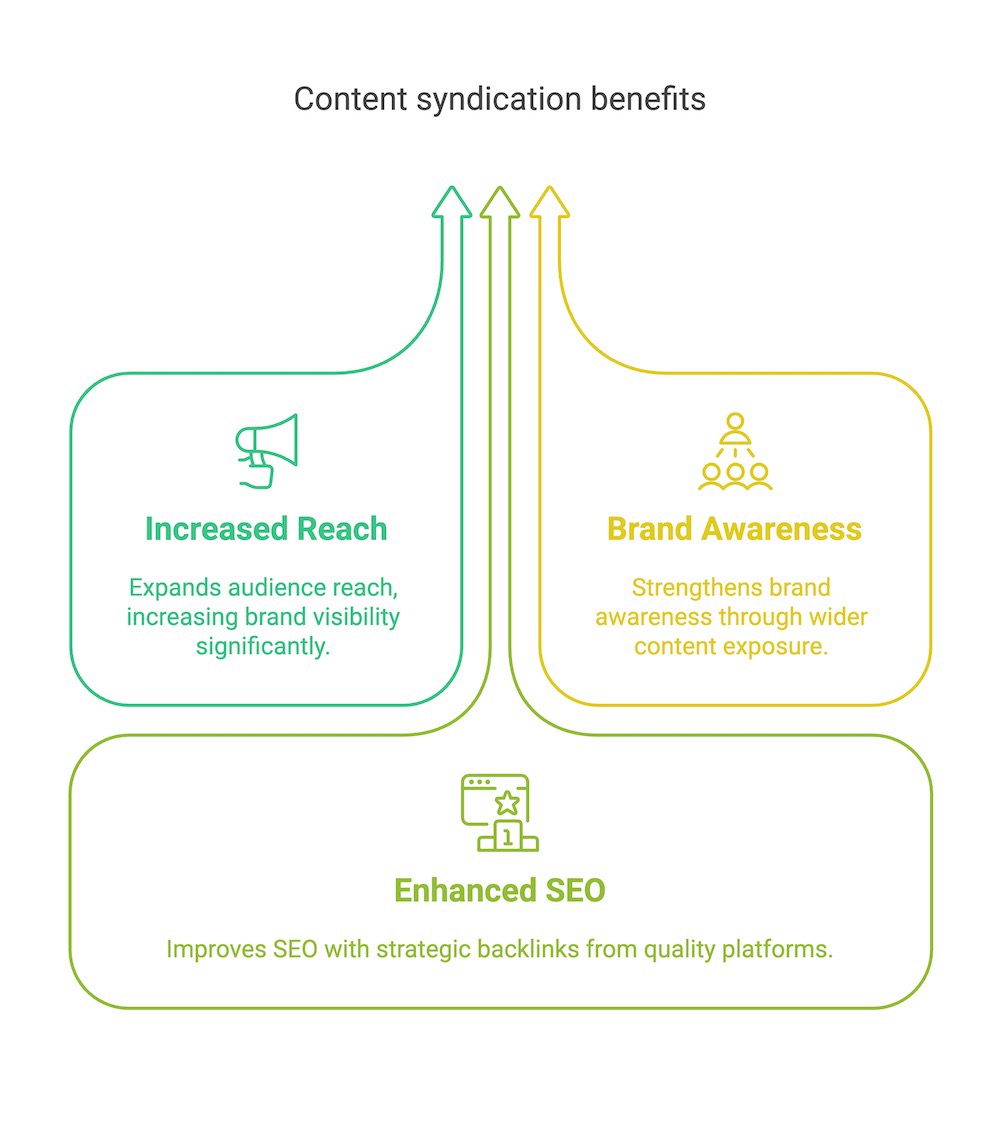
The benefits are twofold:
- Increased Reach and Brand Awareness: expose your content to a wider audience, expanding your brand's visibility.
- Enhanced SEO: strategic backlinks from high-quality platforms can improve your search engine rankings.
Best content syndication platforms of 2026
The content syndication landscape offers a diverse range of platforms, each catering to specific needs. Here's a breakdown of some prominent options categorized by function:
General audience platforms:
- Taboola (paid): masters of "native advertising," seamlessly integrating your content within the host site's organic content for a smooth user experience. Content focus: engaging, informative content with clear CTAs.
- Medium (free): a haven for reaching diverse and engaged audiences, medium fosters thought leadership by connecting your content with readers seeking specific topics. Content focus: Well-written, informative articles.
- Flipboard (free): a social media aggregation app allowing content curation and sharing across various social media platforms. Content focus: visually appealing content with strong headlines and summaries.
- BuzzFeed (freemium): a popular platform known for its viral content. Consider syndicating content that aligns with BuzzFeed's lighthearted and shareable style to reach a massive audience. Content focus: listicles, quizzes, funny visuals, and relatable stories.
B2B and professional platforms:
- LinkedIn articles and SlideShare (free): ideal for B2B marketers and professionals. Share industry insights and build credibility by leveraging these established platforms. Content focus: Industry trends, data-driven reports, white papers.
- Quora (free): a question-and-answer platform where you can establish expertise by providing valuable answers to relevant questions. Content focus: expert answers with clear value propositions.
- Industry-specific publications (pricing varies): research online publications and forums specific to your industry. Many offer content syndication opportunities that target a highly relevant audience. Content focus: tailor content to the publication's specific niche.
Platforms for precise targeting:
- Zemanta (paid): offers programmatic advertising, allowing you to target specific audiences across various networks and maintain precise control over content placement.
- Outbrain Amplify (paid): a paid service from Outbrain that allows for even more granular audience targeting based on demographics, interests, and behaviors.
Platforms for authoritative content distribution:
- Newstex (free): the go-to platform for thought leaders, Newstex distributes your content across a global network of leading digital libraries such as LexisNexis, Moody's NewsEdge, Refinitiv, and Thomson Reuters Westlaw, allowing you to reach diverse academic, corporate, and government audiences. Whether you’re looking to expand your audience or simply generate some passive income, you can do it through Newstex licensed syndication. It’s easy to get set up! Contact us to get started.
- HARO (Help A Reporter Out) (free): a platform connecting journalists with sources. By providing expert commentary and insights on relevant topics, you can gain valuable backlinks and brand exposure. Content focus: expert quotes and insights relevant to current news or industry trends.
Emerging niche-specific platforms:
- Quuu Promote (paid): leverages social media influencers to automatically promote your content to targeted audiences.
- Scoop.it (free & paid plans): a content curation and syndication platform. Discover, curate, and publish content to enhance visibility and audience engagement.
- ContentStudio (paid): a comprehensive content marketing and syndication platform offering content discovery, publishing, and analytics all-in-one. Perfect for streamlining your content strategy across channels.
Additional niche-specific platforms (consider tailoring these to your specific industry):
- Retailers: partner with online retailers to showcase product content and reviews on their platforms.
- Travel: consider travel blogs, online booking platforms, and tourism authority websites for syndication opportunities.
- Finance: financial news websites and investment platforms might be interested in your finance-related content.
Content quality and optimization for syndication
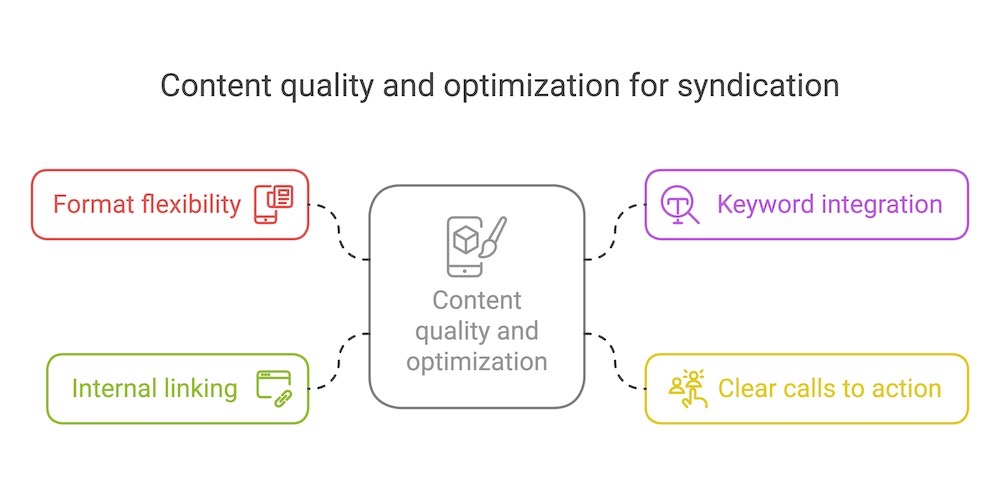
Before you jump into syndication, remember: high-quality content is key. Content that resonates across diverse platforms and delivers value to the audience will see the most success. Here are some tips for optimizing your content for syndication:
- Format flexibility: tailor your content's format to suit different platforms. This might involve adjusting the length, visuals, or layout. For example, keep content for BuzzFeed shorter and more visually appealing, while industry publications might prefer in-depth articles filled with data and statistics.
- Keyword integration: research relevant keywords for each platform and target audience to improve discoverability. Optimize your titles, meta descriptions, and headings with these keywords.
- Clear calls to action (CTAs): craft CTAs that guide users towards your desired action, such as visiting your website, subscribing to your newsletter, or downloading one of your white papers. Make your CTAs clear, concise, and relevant to the content.
- Internal linking: include internal links within your content that point back to relevant pages on your website. This drives traffic to your site, improves user experience, and strengthens your website's SEO.
Optimizing your content syndication strategy:
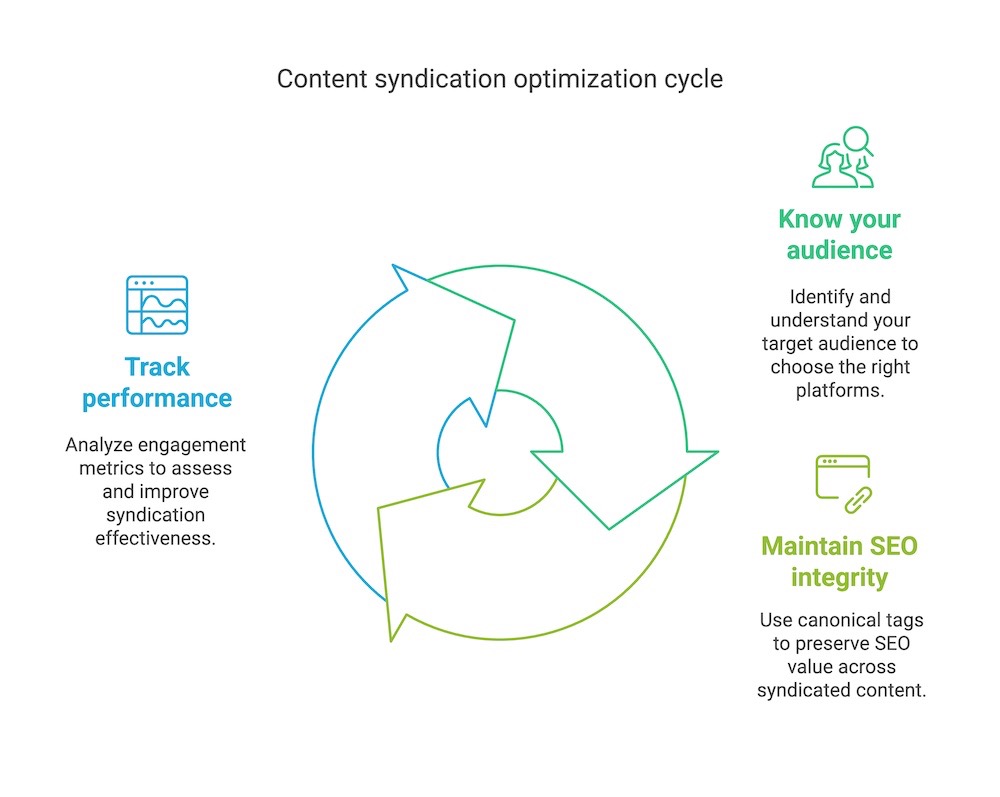
To maximize the effectiveness of these platforms, follow these best practices:
- Know your audience: Choose platforms frequented by your target audience for impactful engagement. Consider demographics, interests, and online behavior when selecting platforms.
- Maintain SEO integrity: Ensure syndicating sites use canonical tags to avoid harming your SEO. Canonical tags help search engines understand the original source of your content.
- Track performance: Monitor your syndicated content's performance through analytics tools. Track metrics like clicks, impressions, and engagement to gauge success and refine your strategy. Analyze which platforms generate the most traffic and engagement for your content.
Potential drawbacks and how to navigate them
Content syndication isn't without its challenges. Here are some potential drawbacks to consider:
- Content saturation: certain platforms might be oversaturated with content, making it difficult for yours to stand out. Focus on quality and target platforms relevant to your niche to overcome this.
- Loss of control: when syndicating content, you relinquish some control over its presentation. Ensure your brand guidelines are followed and prioritize reputable platforms with clear content moderation policies.
- SEO impact: improper syndication can result in duplicate content issues which can negatively impact your search engine rankings. To avoid this, ensure syndicating sites use canonical tags indicating your website as the original source. Canonical tags help search engines understand where the content was first published.
By strategically navigating these potential drawbacks, you can leverage content syndication effectively.
Conclusion: the power is in your hands
The 2025 content syndication landscape empowers you with a wealth of options. From broad-reaching networks to specialized platforms, there's a perfect fit for your needs. By strategically selecting platforms that align with your audience, content type, and SEO goals, you can significantly amplify your content's reach, engage a wider audience, and solidify your brand's presence in the digital marketplace.
Additional resources:
- Content syndication guide
- Content distribution guide
- Content Marketing Institute
- Search Engine Land
- The Moz beginner's guide to SEO
- Does syndicating your content help or hurt your SEO?
This comprehensive list lets you navigate the world of content syndication platforms and leverage them to achieve your content marketing goals. Remember, high-quality content is the foundation, and strategic syndication is the key to maximizing its impact.
Syndicate your high quality content with Newstex
Ready to put your authoritative content in front of hard-to-reach audiences? Whether you’re looking to expand your audience or simply generate some passive income, you can do it through Newstex licensed syndication. It’s easy to get set up! Contact us or schedule a meeting now.
About the author,
José Mauricio Duque
José Mauricio Duque, based in Barranquilla, CO, is currently a Brand Manager at Newstex. José Mauricio Duque brings experience from previous roles at Biz Nation, Snap2objects, Startup Grind and Ministerio de Tecnologías de la Información y las Comunicaciones. José Mauricio Duque holds a 2006 - 2008 Universidade Federal do Paraná. José Mauricio Duque.


