

Newstex publishers' stories: Frank S. Robinson of The Rational Pessimist

Blog categories
Related article
.jpg)
.jpg)

For platforms
License original, human-reviewed content at scale.
The basics
Why don't you go ahead and introduce yourself?
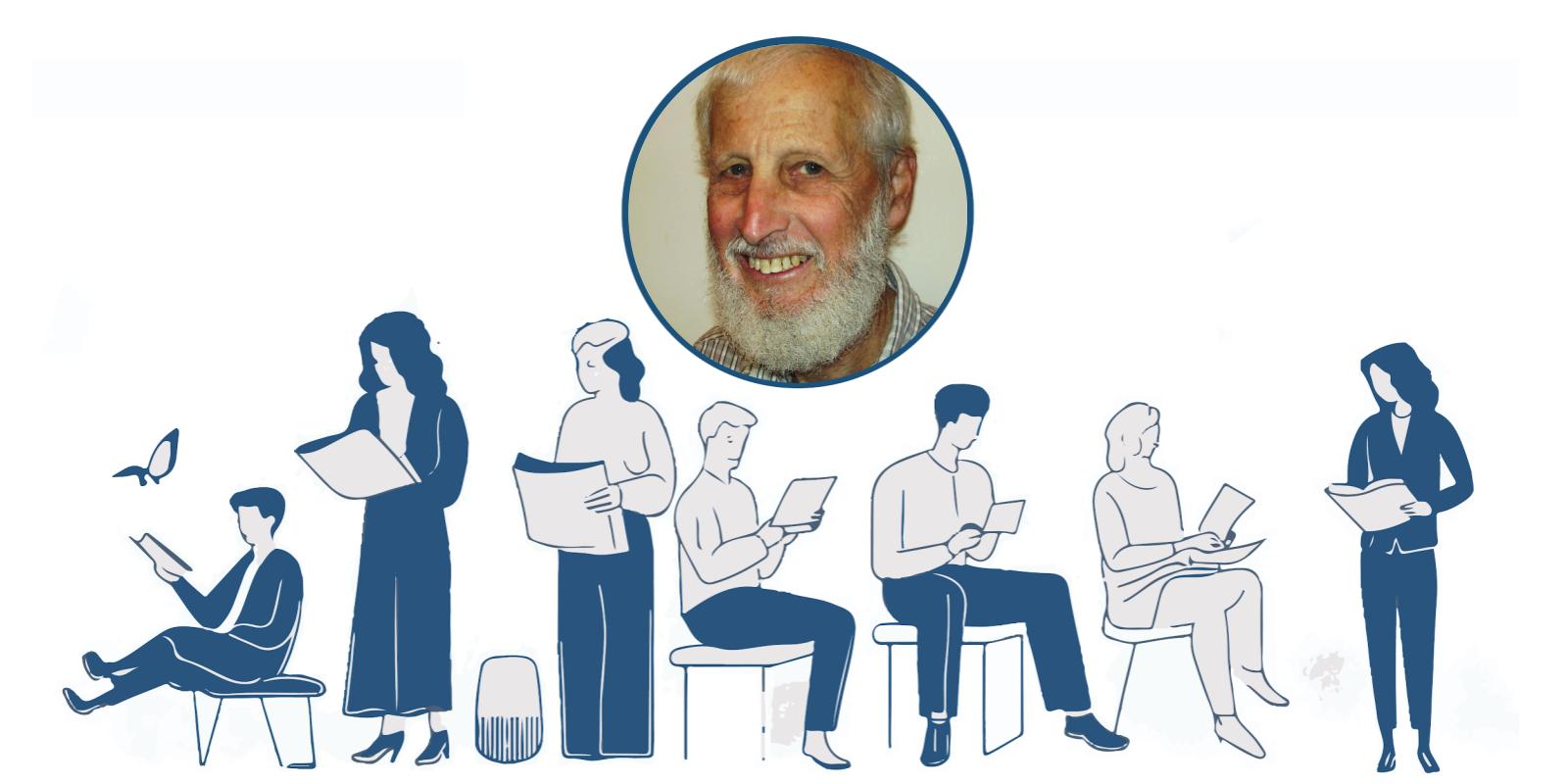
Frank S. Robinson of The Rational Pessimist: I’m 78 years old. I was, at one time, a lawyer and an administrative law judge in state government. As you mentioned, I’ve published a number of books on quite a range of topics.
Since 2008, I’ve been doing this blog, originally titled The Rational Optimist. Last November, I changed the heading to say Rational Pessimist, although the URL remains the same.
I left formal work 28 years ago. I also run a small business—I sell collector coins.
Why did you change the name of the blog?
Frank S. Robinson: I wrote a book in 2008 titled The Case for Rational Optimism. I started the blog to promote the book. At the time, it looked like the world was going in the right direction in many ways, and most people didn’t seem to appreciate that. So I tried to make the case for why people should have an optimistic outlook.
Since then, it appears in hindsight that 2008 was a kind of golden moment—things had really been going right for a while, and afterward, things went in the opposite direction in a lot of ways.
The coup de grâce, if you will, was the 2024 election. It was a huge setback for anyone who is an optimist. I still remain a cheerful person, optimistic by character and personality, but I had to change the title to make a statement about what was happening.
I still remain a cheerful person, optimistic by character and personality, but I had to change the title to make a statement about what was happening.
Choosing topics
What keeps you writing these days?
Frank S. Robinson: Quite simply, I have a lot to say. I feel the world has gone in a lot of wrong directions, especially in the last 10 years. Starting in 2015 with American politics, I found myself wanting to say things that weren’t being said elsewhere.
What I try to do in my blog is say things other people are not saying. I don’t want to just echo what 100 other people are saying. I try to say things that may be a little different and give people a perspective they might not get elsewhere.
Your posts, for those who don’t know, mix philosophy, politics, and social commentary. How do you decide what to write about?
Frank S. Robinson: Good question. It's just whatever strikes me. I post a lot of book reviews. If I read a book and find something worth commenting on, something I think readers of the blog would find insightful, I’ll write about it. Even if they’re not going to read the book, what I have to say may still be worthwhile.
I also think a lot about philosophical questions, like the nature of consciousness and the self. What does it really mean to be me—or anybody? I’ve written quite a few posts exploring that and read a lot of books on the topic, too.
How do you respond to readers who disagree with your optimism or pessimism? What's a fair criticism you've received?
Frank S. Robinson: My political orientation is very clear from my writing. I used to be a conservative Republican—very conservative—until 2017. But the meaning of the word “conservative” has changed entirely, and I don’t associate myself with what passes for conservatism today.
I have acquaintances and friends who are on the other side politically. Sometimes they comment on my blog. Occasionally, I’ll respond, but usually, I just let it go. I don’t think there’s much to be gained from arguing. I believe in free speech, so I don’t block or delete any comments. I just let people comment. But as for engaging with them, I usually don’t.
I don’t think there’s much to be gained from arguing.
Now, have any comments changed my opinions? Yes. Sometimes someone says something I hadn’t considered, and I take it on board as a valid point.
What would you like a new reader to take away after reading 3 or 4 of your blog posts?
Frank S. Robinson: Well, I’d like them to agree with me. I’d like them to vote the way I suggest. Seriously though, one topic I write about from time to time is religion. I’m not religious, and I feel that religion is actually a harmful element in society. That’s something I’d like people to take away from reading what I write.
Finding inspiration
What sparked The Case for Rational Optimism? Was there a specific moment?
Frank S. Robinson: In 2003, I had left my regular job. My family and I were sitting around a swimming pool, and my wife asked if I was thinking of writing anything. I said no, there wasn’t a subject that really grabbed me. Then she said, “Why not write for Elizabeth,” our daughter, who was 10 years old. “Why not write everything you’d like her to know?”
I said, “Hmm, that’s an interesting idea.” So I started a document on my computer labeled Letter to Elizabeth. Well, it became more than a letter. It was interesting because I had to really interrogate my own beliefs and views, deeply. It was a challenge. I even did some extra reading.
It turned into a book originally titled Life, Liberty and Happiness. It laid out everything I believed and understood about life and the world.
After publishing that, I saw some feedback and realized I hadn’t fully registered what the book was really about. The optimism thread came through, so I reworked it into The Case for Rational Optimism which focused on the progress theme backed by science and history.
Now that you’ve changed the name of your blog and see the world a bit more pessimistically, do you disagree with what you wrote back then?
Frank S. Robinson: No, I think what I said at the time was right. A lot of it is still valid, especially about human psychology and how people function.
I had a positive outlook on democracy at the time. Democracy seemed to be on a roll, and more and more countries were becoming democratic. But that has gone into reverse.
Looking back, I see I was perhaps overly optimistic. For example, I wrote a blog post about Abiy Ahmed, the Prime Minister of Ethiopia. At first, he seemed to be doing everything right. I rejoiced in it. But then he turned into a monster.
That’s the fascinating thing about watching world events unfold. I’ve said on my blog that it’s a great saga, better than fiction. You never know how it’s going to go.
Any plans—another book, talks, something new for the blog?
Frank S. Robinson: I do talks. Our local library has a weekly book talk, and I’ve done quite a few of those. But other than that, no big plans. I’m not that young anymore, you know.
Right now, I’ve got at least 20 blog posts written but not yet posted. I try to leave at least two days between posts. But the world keeps throwing stuff at me that I feel compelled to write about.
Frank S. Robinson is a graduate of NYU Law School (1970), and served at the New York Public Service Commission as staff counsel and then administrative law judge (1977-97). He is the author of eight books including Albany’s O’Connell Machine (1973), Children of the Dragon (a novel), and The Case for Rational Optimism (2009). Robinson is a professional coin dealer. He is married to the poet Therese Broderick and has a daughter, Elizabeth. Robinson was appointed to the U.S. Assay Commission by President Nixon in 1972.
About the author,
The Newstex Team
Newstex is a leading provider of authoritative content in the areas of business & law, finance, and technology. We syndicate this digital content through a distribution network of information databases and content marketplaces around the world.


